1. Introduction: The Routine of Refinement
In the relentless machinery of mobile telecommunications, the annual product cycle often feels less like a journey toward innovation and more like a mandated corporate ritual. The Google Pixel 10a, arriving on the 5th of March with a familiar £499 price tag, embodies this sentiment perfectly. It is a device that carries a distinct “afterthought” vibe, suggesting that Google is now content to coast on its software laurels rather than push the boundaries of mid-range hardware.
This is not a revolutionary leap; it is a software-defined re-release. While the industry often demands “change for the sake of change,” Google has opted for a “steady as she goes” approach that feels almost defiant in its lack of ambition. The Pixel 10a is positioned as the budget-friendly sibling to the flagship Pixel 10 series, designed for the pragmatist rather than the enthusiast.
The central thesis of this handset is simple: hardware is merely the vessel, while software—specifically Gemini-powered AI—is the captain. By refining existing successes rather than reinventing the wheel, Google is banking on the idea that consistency is the ultimate selling point for the average consumer. However, in a market where “treading water” can quickly lead to mid-table mediocrity, we must ask if this level of refinement is enough to stay relevant.
This review explores whether the subtle polish applied to the Pixel 10a justifies its existence in 2026. For those seeking a radical departure from the previous generation, prepare for a lesson in the routine of mobile capitalism.
2. Design and Build: Achieving the ‘Total Flush’ Aesthetic
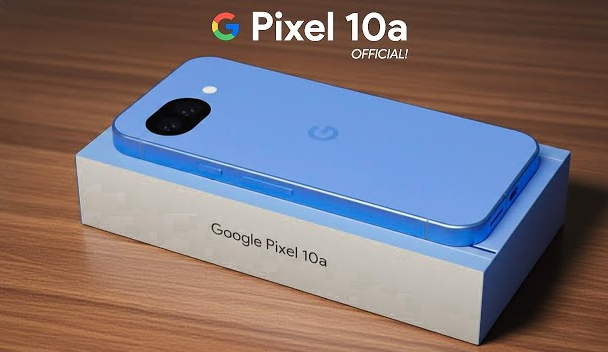
The physical profile of the Pixel 10a is so similar to its predecessor that one could be forgiven for mistaking them at a glance. It maintains the same dimensions and super-flat aesthetic, using a 100% recycled aluminium frame and an 81% recycled plastic back. While the lack of glass on the rear may feel less “premium,” it contributes to a robust, utilitarian feel that is well-suited for daily use.
The most significant design shift is the transition to a “totally zero” flush back. While the Pixel 9a featured a “tiny camera bump,” the 10a eliminates this protrusion entirely. The dual camera lenses are now perfectly level with the rear casing. This is a triumph for ergonomics, as it completely removes the “table wobble” that has plagued modern smartphones for years. It is a clean, honest design that prioritises functional stability over photographic posturing.
Google’s commitment to sustainability is evident in the material percentages. The shift to a fully recycled frame and a high-percentage recycled plastic rear is commendable, even if it feels like a necessary box-ticking exercise in 2026. Interestingly, despite being 0.1mm thicker to accommodate internal components, the device is actually 3 grams lighter than the 9a, bringing the total weight down to approximately 186g.
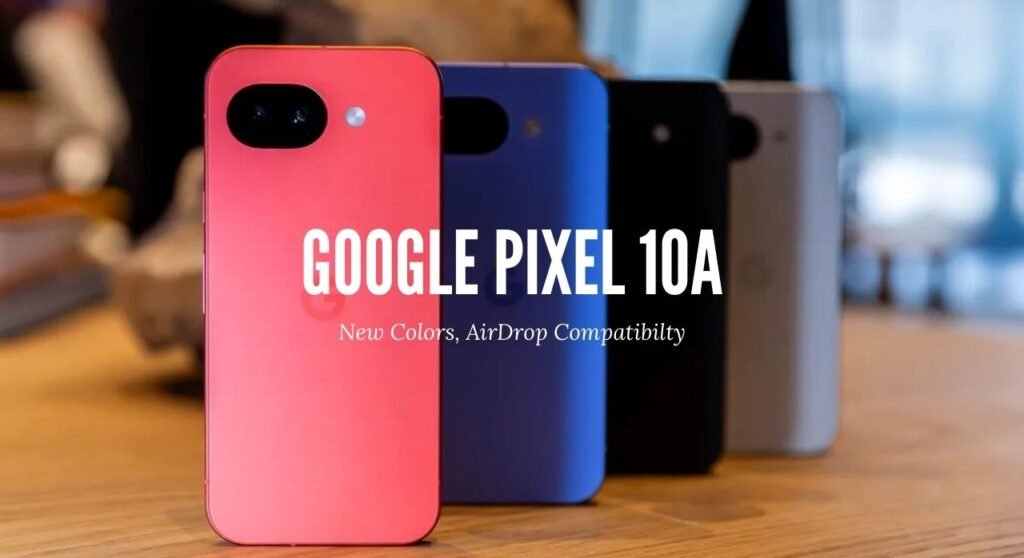
The colour palette for this generation includes Fog (a soft, whitish-green), Obsidian (a light black), Berry (a vibrant, punchy red), and Lavender (a distinctive blue). These shades are richer and darker than previous iterations, offering a more mature aesthetic. The device retains its IP68 rating, ensuring that its “budget” status does not come at the cost of water and dust resistance.
3. Display Evolution: Brighter, Tougher, and Thinner Bezels
The front of the device is dominated by a 6.3-inch 1080p OLED panel. While the general footprint remains constant, Google has implemented a series of iterative upgrades that significantly improve the user experience, particularly regarding outdoor visibility and long-term durability.
- Peak Brightness: Increased by 11% to a staggering 3,000 nits, ensuring clarity even under direct midday sun.
- Durability: An upgrade from the antiquated Gorilla Glass 3 to Gorilla Glass 7i, offering far superior scratch and drop resistance.
- Aesthetic Polish: The bezels are a tad thinner, providing a subtle increase in usable screen real estate and a more modern appearance.
The display supports a variable refresh rate of 60Hz to 120Hz. However, in a move that feels like a baffling oversight, Google continues to ship the device with the 60Hz setting enabled by default. Users must manually dive into the settings to unlock the smoother 120Hz experience, a hurdle that many casual consumers may never clear.
While the bezels remain “semi-thick” compared to the ultra-thin borders of the flagship Pro models, they are symmetrical and well-rounded. The OLED panel itself is vibrant and sharp, maintaining the high standard of colour accuracy we have come to expect from the Pixel line.
4. Performance and Internal Specs: The Tensor G4 Carryover
Perhaps the most contentious aspect of the Pixel 10a is the decision to reuse the Tensor G4 chipset. In previous years, the A-series would inherit the latest flagship silicon, but in 2026, the 10a is left treading water with last year’s processor. This creates a wider performance gap than we have seen in previous generations.
To put this in perspective, the newer Tensor G5 found in the flagship Pixel 10 series is roughly 35% faster in everyday tasks and up to 60% faster in AI-related processing. By sticking with the G4, Google is effectively limiting the future-proofing of this device. It still features 8GB of RAM and a base storage of 128GB (UFS 3.1). In an era where 256GB is becoming the standard, 128GB feels like a frustratingly small starting point for a “new” release.
The Omission of ‘Pixel Snap’
A major disappointment for modern users is the lack of “Pixel Snap” (Qi2 magnets). While the flagship Pixel 10 range now includes integrated magnets for a burgeoning ecosystem of chargers, wallets, and mounts, the 10a has been denied this feature. This omission feels like a cynical way to differentiate the budget model, especially when competitors are increasingly adopting magnetic standards.
The internal battery remains at 5,100 mAh. While this was a highlight of the 9a, the lack of growth reinforces the “re-release” narrative. Nevertheless, it remains a substantial capacity for a 6.3-inch device, comfortably providing all-day endurance for most users.
5. Charging Upgrades: Marginal but Welcome Gains
While the battery capacity has plateaued, Google has provided a slight boost to charging speeds. These gains bring the 10a closer to the standard Pixel 10, though they still pale in comparison to the 45W speeds offered by the flagship Pro models or the rapid charging seen in Chinese mid-range competitors.
| Feature | Pixel 9a | Pixel 10a |
| Wired Charging (Peak) | 23W | 30W |
| Wireless Charging (Peak) | 7.5W | 10W |
These increments are marginal. A 30W peak wired speed is hardly a revolutionary leap in 2026, and it still requires a compatible high-speed mains adapter that is not included in the box. Wireless charging at 10W is equally conservative, serving more as a convenience for overnight charging rather than a quick top-up solution.
6. Camera Hardware and Gemini-Powered Software
On a hardware level, the Pixel 10a is a carbon copy of its predecessor. It utilises the same 48MP main sensor, 13MP ultrawide lens, and 13MP selfie camera. In the world of tech journalism, this is often a cause for concern, but Google’s strategy is to let the Tensor G4’s NPU (Neural Processing Unit) do the heavy lifting via Gemini.
The Gemini-Powered Photography Suite
The Pixel 10a leverages sophisticated AI to compensate for its aging hardware. These features are designed to make high-level editing accessible to the masses:
- Auto Best Take: This feature is a lifesaver for group photography. It analyses faces across several frames and merges them into a single image where everyone is smiling and looking at the lens. It’s effectively “perfecting” reality through code.
- Camera Coach: Powered by Gemini, this acts as a real-time tutor. It suggests better framing, advises on angles, and offers posing ideas as you compose your shot. It’s a “quality of life” win for those who struggle with photographic composition.
- Magic Editor: This is where the NPU shines. Users can use natural language text prompts to alter their photos. For instance, typing “change shirt colour to blue” or “remove the background windows” allows for complex manipulations that once required expert Photoshop skills.
Despite the aging sensors, Google’s image processing remains some of the best in the business. The contrasty “Pixel look” is alive and well, providing excellent dynamic range and skin tone accuracy that often outperforms more expensive rivals.
7. Safety and Connectivity: Satellite SOS and Quick Share
Connectivity is perhaps the one area where the Pixel 10a introduces genuine, life-saving utility. The inclusion of Satellite SOS is a major milestone for the A-series. This allows users to contact emergency services via satellite when they are outside the reach of cellular signals or Wi-Fi—a feature that was once the exclusive domain of high-end flagships.
The Quick Share ‘AirDrop’ Experience
A “sweet” update that significantly improves daily use is the native performance of “Quick Share”. For users in mixed-ecosystem households, this is a transformative change. It now functions with “AirDrop-like” efficiency between Google and Apple devices, allowing for near-instant file transfers without the friction of third-party apps or cloud uploads.
Furthermore, Google continues to lead the industry with its support commitment. The Pixel 10a is guaranteed 7 years of OS and security updates. This ensures the device will remain functional and secure until 2033, making it one of the most sustainable purchases for those who prefer to keep their handsets for the long haul.
8. Head-to-Head Comparison: Pixel 10a vs. Pixel 9a
To appreciate the granular nature of this update, one must look at the specific data points where Google has tweaked the formula.
| Specification | Pixel 9a | Pixel 10a |
| Peak Brightness | ~2,700 nits | 3,000 nits |
| Glass Type | Gorilla Glass 3 | Gorilla Glass 7i |
| Wired Charging | 23W | 30W |
| Wireless Charging | 7.5W | 10W |
| Camera Bump | 0.1mm (Minimal) | 0.0mm (Totally Flush) |
| Satellite SOS | Not Supported | Supported (Select Regions) |
| Recycled Aluminium | Lower Percentage | 100% Recycled |
| Recycled Plastic | Lower Percentage | 81% Recycled |
| Weight | ~189g | ~186g |
| Thickness | Base Measurement | +0.1mm Increase |
9. The Critical Verdict: Benefits, Drawbacks, and Target Audience
The Pixel 10a is a device that succeeds through corporate inertia and software excellence rather than hardware innovation.
Benefits
- Superb Software Suite: Features like Auto Best Take and Camera Coach remain industry-leading for the price.
- 7-Year Longevity: The update window provides incredible value for long-term owners.
- Flush Ergonomics: The “totally zero” bump is a refreshing change in a world of massive camera islands.
- Satellite Safety: Bringing Satellite SOS to a £499 phone is a significant safety win.
Drawbacks
- Hardware Stagnation: Using the aging Tensor G4 instead of the G5 is a missed opportunity for future-proofing.
- The ‘Pixel Snap’ Omission: The lack of magnets for accessories is a frustrating and unnecessary limitation.
- Conservative Charging: 30W is “mains power” at a glacial pace compared to modern standards.
- 60Hz Default: Shipping with the high refresh rate disabled is a disservice to the consumer.
Target Audience
The Pixel 10a is a fantastic upgrade for anyone currently using a Pixel 6a or 7a. For those on a 3-to-4-year upgrade cycle, the jumps in brightness, glass durability, and AI capability will feel substantial. However, if you currently own a Pixel 9a, there is absolutely no reason to upgrade; you are essentially looking at the same phone with a fresh coat of paint.
10. Final Thoughts: Is Consistency Enough?
The Google Pixel 10a is the quintessential “safe” bet. It embodies the philosophy of “if it isn’t broken, don’t fix it,” but it also highlights the predictable routine that capitalism often falls into. While companies like Nothing have publicly questioned the need to churn out a new phone every year just for the sake of it, Google seems committed to the cycle, even when the hardware changes are microscopic.
This device is an afterthought in terms of engineering, but a powerhouse in terms of software. It offers a premium, Gemini-integrated experience for half the price of a flagship. However, the decision to withhold the Tensor G5 and magnets suggests that Google is carefully “protecting” its flagship sales rather than offering the best possible value to the budget consumer.
Ultimately, the Pixel 10a remains a “decent deal” because the software is so strong it masks the hardware’s lack of ambition. It is a reliable, high-quality tool that will last for years, even if it fails to excite the senses. For those who want a phone that just works, the routine of refinement continues to deliver—just don’t expect a revolution.